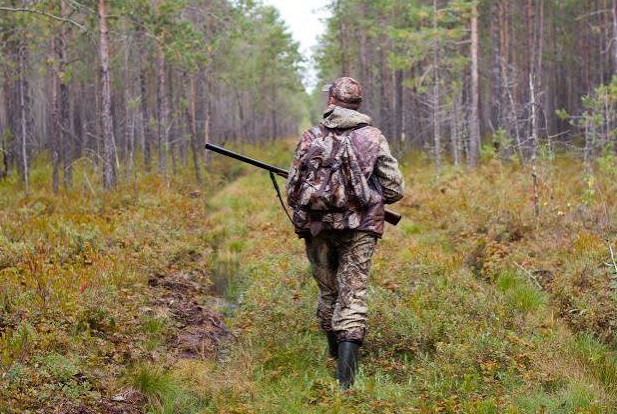
After the rut, deer stop moving on hormones and start moving on arithmetic. Cold sets the calorie bill and pressure sets the hours they are willing to pay it.
What changes after the rut ends?
Bucks that covered miles a day go back to a small core area and stay in it. Range collapses, and so does daylight movement.
A worn out buck in December is doing one thing: getting back the weight he burned in November. That means food, cover and the shortest possible distance between them. He is not curious any more, and he is not going to walk past your stand to check a scrape.
The hunting problem inverts. During the rut you sit terrain and let deer come to you, which is the approach in hunting the rut in big woods with no field edge to sit. In the late season you find the food and the bedding, and then you work out how to get between them without being seen.
Where cold pushes deer
Toward thermal cover and southern exposure. A bedded deer is managing heat loss, and slope, wind and canopy decide how much it costs.
| Conditions | Where they bed | When they feed | Your best move |
|---|---|---|---|
| Cold and clear | South facing slopes, sun on them by ten | Late afternoon | Sit the food, come in from above |
| Cold and windy | Leeward benches, thick conifer | Shorter windows | Hunt the downwind edge of cover |
| Deep snow | Conifer stands with less snow under them | Midday | Follow the trails they have already broken |
| A warm spell | Back to open hardwoods | Dawn and dusk | Return to normal early season spots |
The counterintuitive one is the warm spell. Two mild days in January can put deer back on patterns you gave up on in October, and almost nobody is out there to see it.
- South facing slopes are the first place to look on any cold, clear morning
- Conifer holds less snow underneath it, which makes standing and walking cheaper
- A bench out of the wind beats a warmer slope in the open every time
Expert tip from Nathan Kestler, Big woods editor: “Late season I stop hunting mornings almost entirely. They are bedded before shooting light and I am just teaching them where I walk.”
How much does hunting pressure really move them?
More than weather does. Deer tolerate cold, which they are built for. They do not tolerate repeated human intrusion into bedding cover.
By the late season every deer alive has spent two months being hunted. They have not become nocturnal in some mystical sense. They have simply learned which hours and which places carry risk, and they have moved their daylight movement into the places nobody walks.
- A briar choked draw that nobody wants to walk through
- A steep face that is easy to glass and miserable to climb out of
- Two acres of thick cover squeezed between a road and a field
Those places are usually small, ugly and inconvenient: a briar choked draw, a steep face nobody wants to climb out of, a two acre patch of cover between two roads. If it looks like a nuisance on a map, look harder.
Sitting the late season without burning it down
You get very few clean entries. Spend them deliberately, and stay out on the days you cannot get in unseen.
- Pick the food source first, then work backwards to an entry route that never crosses bedding.
- Wait for a wind that makes that route work, even if it costs you a week.
- Sit afternoons, from early enough that you are settled two hours before dark.
- Leave after full dark, and leave the way you came in.
Expert tip from Curt Bellamy, Public land editor: “One quiet sit on the right wind beats five sloppy ones. On public ground in December, the hunter who stays out on the wrong days is the one who kills a deer.”
The last week
Late season rewards patience and punishes hope. The deer are still there, and they are more predictable than they have been since September.
Nathan has taken more late season bucks in the final four days than in any other stretch of the year, from the same three setups he refuses to hunt until conditions are exactly right. That is not luck. It is restraint, which is a harder skill than woodsmanship.
If the season does end with a deer down, the cold is now working for you instead of against you, and the process is covered in field dressing a deer in the order that keeps meat clean.
This is the last phase of a long arc. The whole thing, from July scouting to the final week, is laid out in our guide to the phases of the deer season and how tactics change through them.
Big woods editor
Nathan Kestler
Cruises timber for a living and hunts the same ridges on his own time. Open hardwoods, nothing to hide behind.